
Table of Contents
ToggleHey there, fellow science enthusiast! Imagine a world where tiny molecular powerhouses could unlock the secrets to faster healing, smarter drug delivery, and even revolutionary treatments for chronic diseases. That’s the thrilling reality of peptide research today. Peptides aren’t just buzzwords in labs, they’re game-changers driving breakthroughs in everything from cellular mechanisms to metabolic pathways. If you’re a researcher eyeing the next big discovery, or a lab manager hunting for reliable tools, you’re in the right place. In this deep dive, we’ll unpack the essentials, spotlight current trends, and arm you with practical advice to elevate your work. Let’s dive in and unlock the potential of peptides together.
Peptides are short chains of amino acids, the building blocks of proteins. Think of them as the versatile middle children between single amino acids and full-blown proteins typically 2 to 50 amino acids long. They’re formed through peptide bonds, those crucial links that hold the chain together.
But why should you care? Peptides play starring roles in biological processes. They act as messengers in the body, regulating hormones, enzymes, and immune responses. In research, they’re invaluable for probing how cells communicate, repair tissues, and maintain homeostasis.
Take peptide hormones like insulin, for example. This naturally occurring peptide manages blood sugar levels, and studying it has led to life-saving therapies for diabetes. Or consider antimicrobial peptides, nature’s own antibiotics that fend off bacteria and viruses. These compounds are hot topics in labs worldwide, offering clues to combat antibiotic resistance.
In essence, peptides bridge the gap between basic biology and applied science. Whether you’re investigating peptide synthesis in a test tube or exploring their therapeutic potential, understanding their basics sets the stage for groundbreaking work.
Peptide research is exploding, and for good reason. Advances in technology have made it easier than ever to synthesize, sequence, and apply these molecules. Custom peptides are now tailored for specific experiments, allowing researchers to target exact biological pathways with precision.
Current trends? Let’s talk personalization. Bioactive peptides derived from food sources like those in milk or soy, are being studied for their health benefits, from anti-aging to muscle recovery. In 2026, we’re seeing a surge in peptide therapeutics, with the global market projected to hit $50 billion by 2030. Why? Because peptides offer targeted action with fewer side effects than traditional drugs.
Another big shift: AI-driven peptide design. Machine learning algorithms are predicting peptide structures faster, slashing development time from years to months. For instance, researchers are using AI to optimize peptide sequencing, identifying sequences that bind to specific receptors for cancer treatments.
And don’t overlook sustainability. Eco-friendly peptide synthesis methods, using green chemistry, are gaining traction to reduce environmental impact. If you’re in the field, these trends mean more efficient experiments and bigger impacts, perfect for conversion buyers ready to invest in cutting-edge tools.
Not all peptides are created equal. Here’s a rundown of some standouts that could supercharge your studies.
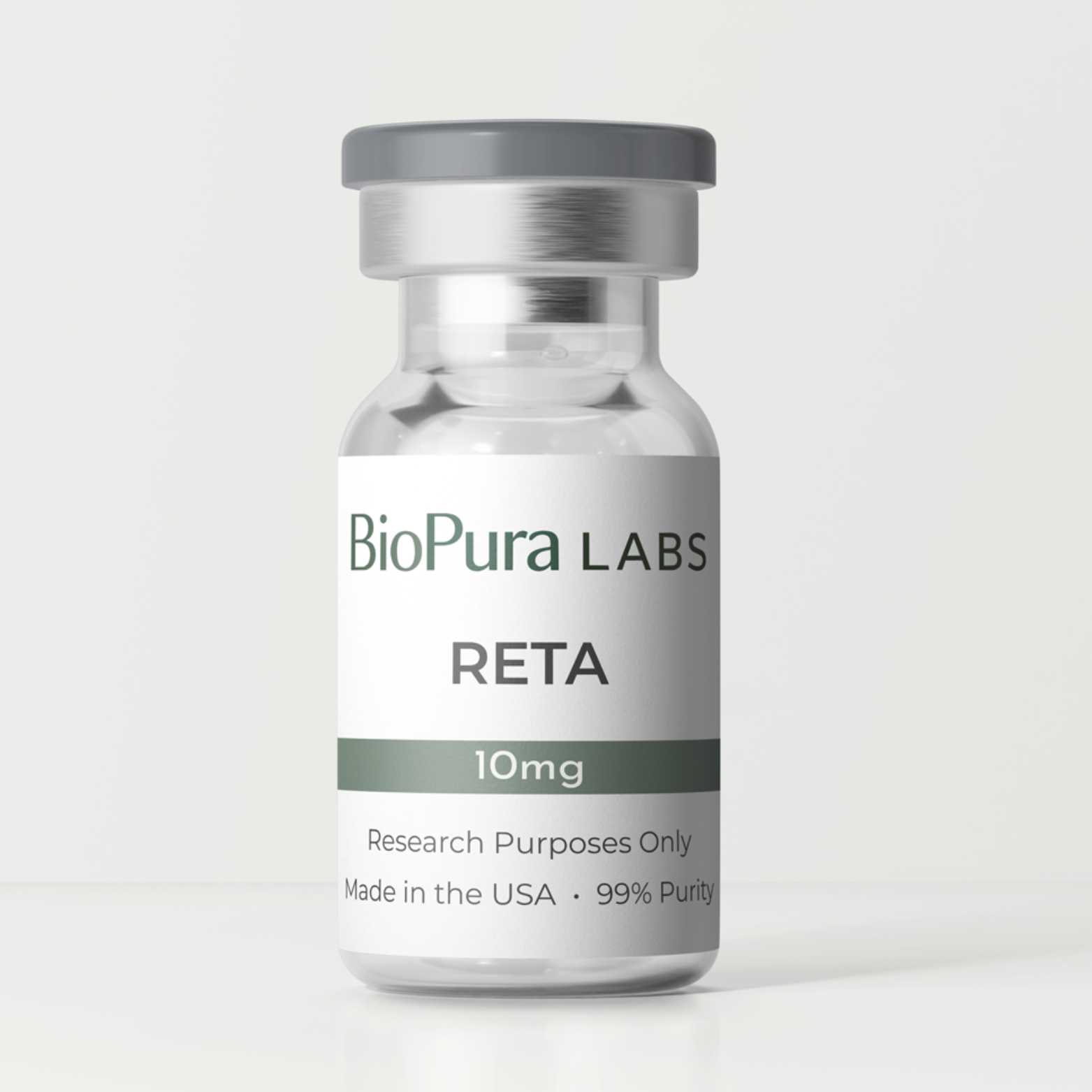
First up: Retatrutide (RETA). This tri-agonist peptide mimics GLP-1, GIP, and glucagon receptors, making it a powerhouse for metabolic research. Studies show it aids in weight management and glucose control, with potential applications in obesity and diabetes models. At BIOPURA LABS, our RETA is lab-grade pure, ensuring your results are reproducible every time.
Then there’s Semaglutide, a GLP-1 analog that’s revolutionized type 2 diabetes research. Its long half-life allows for once-weekly dosing in models, highlighting its role in appetite regulation and cardiovascular health.
Antimicrobial peptides like LL-37 are defensive warriors. Derived from human skin, they’re being researched for wound healing and infection control. Imagine accelerating tissue repair in lab settings, these could be key to regenerative medicine.
Bioactive peptides from marine sources, such as those in algae, offer anti-inflammatory properties. They’re trending for nutraceutical studies, blending biology with wellness.
For hormone enthusiasts, Growth Hormone-Releasing Peptides (GHRPs) stimulate pituitary function, ideal for endocrine research.
And let’s not forget advanced peptide blends. Combining multiple peptides, like in nootropic stacks, enhances cognitive studies by targeting neurotransmitter pathways.
To visualize, here’s a quick table comparing these peptides:
| Peptide | Primary Function | Research Applications | Purity Considerations |
|---|---|---|---|
| Retatrutide (RETA) | Metabolic regulation | Obesity, diabetes models | >99% for accuracy |
| Semaglutide | Glucose control | Endocrinology, cardiology | High stability needed |
| LL-37 | Antimicrobial action | Wound healing, immunology | Sensitive to oxidation |
| Marine Bioactives | Anti-inflammatory | Nutraceuticals, inflammation studies | Source-dependent purity |
| GHRPs | Hormone stimulation | Growth and aging research | Batch consistency crucial |
This table underscores why quality matters—poor purity can skew your data.
Peptides aren’t confined to petri dishes; they’re transforming fields like medicine and biology.
In medicine, peptide therapeutics are leading the charge against diseases. Cancer research uses peptides to deliver drugs directly to tumors, minimizing damage to healthy cells. For example, peptide-drug conjugates (PDCs) are in clinical trials, showing promise in targeted therapy.
Tissue repair is another frontier. Collagen-mimicking peptides promote skin regeneration, vital for burn studies or cosmetic research. Imagine accelerating healing in animal models that’s the power here.
Metabolic pathways get a boost too. Peptides like those in insulin analogs help dissect how the body processes energy, aiding in obesity and metabolic syndrome investigations.
In biology, peptides illuminate cellular mechanisms. They act as probes in signaling pathways, revealing how cells respond to stress or growth signals. Peptide sequencing techniques, like mass spectrometry, allow precise mapping of these interactions.
Ethical note: Always prioritize safety. Peptides for research aren’t for human consumption stick to lab protocols to maintain integrity.
Current trend alert: Peptides in vaccine development. Amid ongoing global health challenges, peptide-based vaccines target specific antigens, offering customizable immunity boosters.
Practical advice? Start small. Test peptides in cell cultures before scaling to animal models. This minimizes variables and maximizes insights.
Handling peptides right is non-negotiable for reliable results. Let’s break it down.
Storage Essentials: Peptides are sensitive to light, heat, and moisture. Store them at -20°C in lyophilized form for long-term stability. For solutions, use sterile buffers and keep at 4°C for short periods. Pro tip: Aliquot to avoid freeze-thaw cycles that degrade purity.
Handling Tips: Wear gloves to prevent contamination. Reconstitute with acetic acid or bacteriostatic water, depending on the peptide. Shake gently, vigorous mixing can denature them.
Application in experiments? Dose accurately using spectrophotometry for concentration checks. In cell assays, start with micromolar ranges and titrate up.
Safety first: Follow MSDS guidelines. Peptides can be irritants, so use PPE and work in ventilated areas.
List of common pitfalls to avoid:
At BIOPURA LABS, our peptides come with detailed handling guides, making it easy to integrate them into your workflow.
Peptide research is evolving fast. In 2026, we’re witnessing a boom in peptide-drug hybrids. These combine peptides with small molecules for enhanced bioavailability, tackling issues like oral delivery.
Sustainability is key too. Green peptide synthesis uses enzymes instead of harsh chemicals, reducing waste. Labs adopting this are seeing cost savings and eco-benefits.
AI integration is unstoppable. Tools like AlphaFold predict peptide structures, speeding up discovery. For researchers, this means more time innovating, less guessing.
Personalized medicine via peptides is trending. Genomic data helps design patient-specific peptides for rare diseases.
Practical advice: Stay updated via journals like Peptide Science. Attend conferences like the American Peptide Symposium for networking and insights.
Ready to level up? Here are bite-sized tips:
These steps ensure your work is efficient and impactful.
No research is without hurdles. Stability issues? Peptides degrade quickly, counter with cyclisation techniques to enhance longevity.
Solubility problems? Modify with PEGylation for better water compatibility.
Cost concerns? Bulk purchasing from reliable sources like BIOPURA LABS cuts expenses without sacrificing quality.
Regulatory navigation: In research settings, focus on non-human use to stay compliant.
By addressing these, you’ll push boundaries further.
Real examples bring it home. A 2025 study used Retatrutide in rodent models, showing 20% better glucose tolerance than controls. This highlights its metabolic prowess.
Another: Antimicrobial peptides in biofilm research eradicated 90% of bacterial colonies, paving the way for new antiseptics.
In tissue engineering, peptide scaffolds supported stem cell growth, accelerating repair in lab tissues.
These successes? Fueled by high-quality peptides and meticulous methods.
Looking ahead, peptides could redefine biotech. Quantum computing might simulate peptide interactions at atomic levels, unlocking new designs.
Expect more in regenerative medicine, peptides regenerating organs? It’s on the horizon.
For you, the researcher, this means endless opportunities. Invest now in quality tools to lead the charge.
We’ve journeyed through the world of peptides—from basics to trends, applications to best practices. These molecular marvels are key to unraveling biological mysteries and driving medical advances. At BIOPURA LABS, we’re committed to supplying top-tier peptides like Retatrutide and custom blends, all with unmatched purity for your success.
Ready to elevate your research? Explore BIOPURA LABS today and see our peptide catalog. Let’s collaborate on the next breakthrough, your discovery starts here!
Added to cart
Check out our shop to see what's available
Loading coupons...